
Begin with the conversation the room must support
A meeting room can look finished while remaining difficult to understand on a call. Before comparing microphone models, define the conversations the room must support: short team meetings, board discussions, presentations, training, or several of these uses. Each pattern creates different speaking positions and demands on the audio system.
When engaging an AV integrator in China, bring the architectural plan, furniture layout, intended meeting platform, and realistic examples of room use. Sinoway's published service scope includes design and engineering with acoustic and network requirements, alongside integration and ongoing support.
Treat this as a planning guide for workplace teams. It does not prescribe one acoustic target for every space. The appointed designers should establish project-specific criteria and an agreed test method based on the room's size, finishes, use, and constraints.
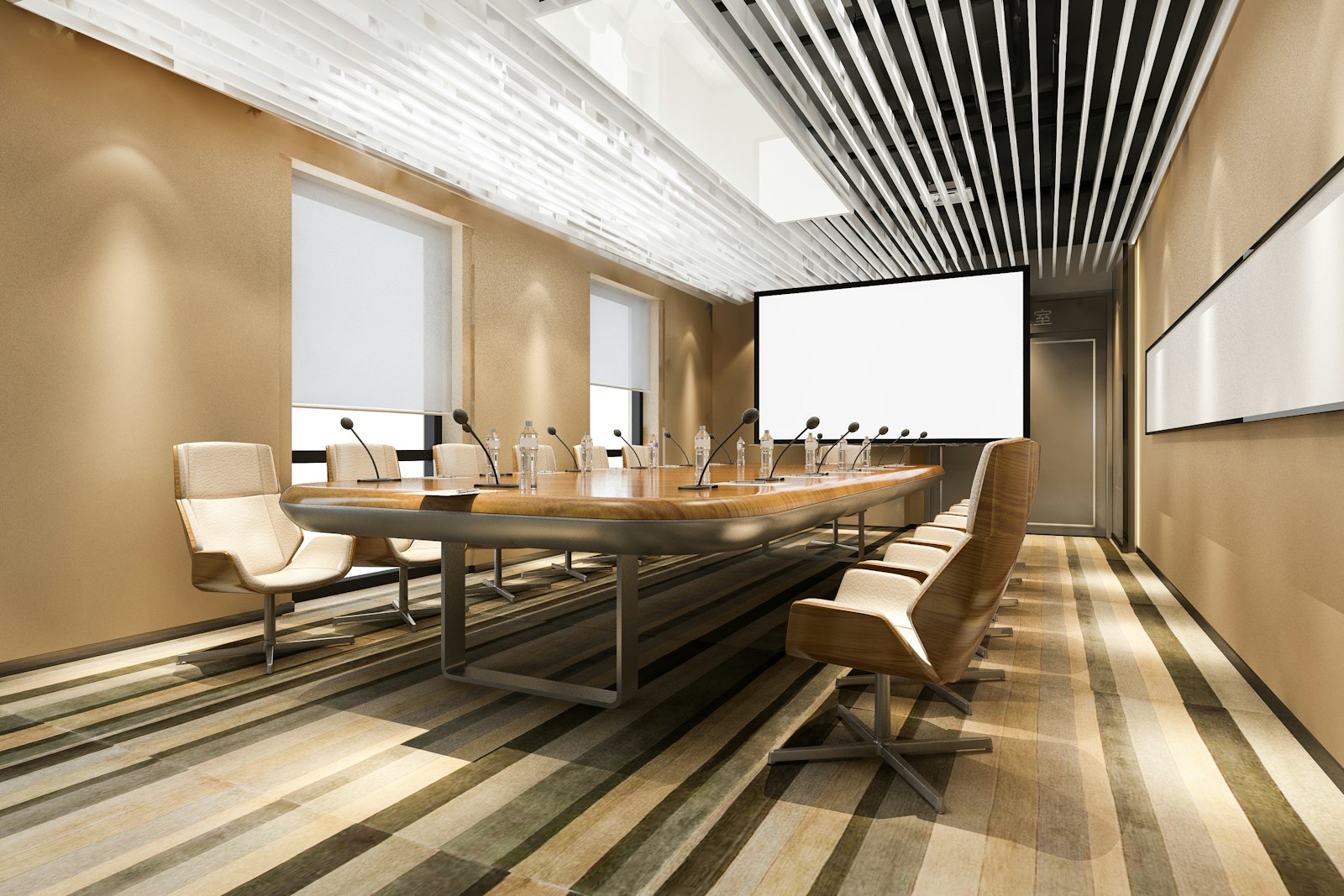
Separate background noise from reflected speech
Background noise comes from sources such as ventilation, equipment, adjacent activity, or traffic. Reverberation is the persistence of reflected sound within the room. Both can make speech harder to capture clearly, but they point to different design questions.
Shure's conferencing microphone explanation describes how room noise, reflections, and the distance between a talker and microphone affect the sound entering the system. A device specification alone cannot describe those actual conditions.
During a site visit, note when a problem occurs and where it is noticeable. Listen with the room in a normal operating state, including ventilation and the equipment that will remain on during meetings. A quiet inspection of an empty room with services switched off can miss the conditions users will encounter.

Review the room finishes before they are fixed
Ask the architect or acoustic specialist to review the actual finish schedule. Large reflective surfaces, ceiling construction, furniture, and decorative elements all belong in that discussion. The question is how the proposed room supports speech, rather than whether one material looks soft.
Do not assume that a decorative panel provides acoustic absorption. Confirm the intended function and the relevant product information with the responsible designer. Likewise, an absorptive finish inside the room is not the same as preventing sound from entering through a partition or door.
Coordinate any proposed treatment with lighting, ventilation, sprinklers, access panels, and the visual design. Late changes can create conflicts that were avoidable at drawing stage. Assign someone to close those coordination questions before installation rather than leaving them to individual contractors.

Keep the seating layout in the microphone brief
Mark where people will actually speak. Include the head of the table, ordinary seats, a presentation position, and any flexible seating used during training. A room drawn for one arrangement may operate very differently after furniture moves.
Describe whether participants remain seated or walk around. Include typical occupancy and the occasions when the room will be full. Ask the AV designer how each intended position is covered and what limitations the chosen arrangement carries.
The camera and microphone planning guide for larger rooms addresses the broader coverage decision. Acoustic planning should feed that equipment brief, not arrive after the devices have already been ordered.

Use processing for the right problem
Acoustic echo cancellation addresses remote audio played into the room and then picked up by local microphones. It is different from reducing background noise or managing the room's reflected speech. Shure's digital signal processing overview explains the distinction.
Ask the integrator to document where the relevant processing occurs and how the selected conferencing system is configured. Avoid independently enabling several overlapping processing paths simply because each device offers an audio setting.
Make decisions through controlled listening tests. A setting that makes one recorded sentence sound cleaner may still affect natural conversation, interruptions, or overlapping speech. Evaluate the configured room as a complete system rather than approving individual settings in isolation.
Give standing presenters their own test case
A seated discussion and a standing presentation can place voices in different parts of the room. Include both if they are real uses. Test whether a presenter can speak naturally while turning toward the screen, moving within the agreed area, and answering a question.
Do not solve a coverage gap by expecting every presenter to discover the microphone's ideal position during a live meeting. Clarify the usable presentation area and any equipment or technique required. Make those instructions part of the user guidance.
Flexible training layouts deserve separate consideration. The divisible training room AV guide discusses changes in room configuration; each supported configuration also needs a coherent audio brief.
Listen from the remote participant's side
Arrange a test with someone listening from outside the room through the intended meeting platform. Ask them to report intelligibility, changes in level between seats, distracting noise, and any loss of natural conversation.
Use normal speaking voices from all intended positions. Include a short exchange rather than only one person reading a script. Test the room under an agreed representative condition and record the configuration used so that results can be compared.
Check that the remote listener's own device or environment is not creating the apparent problem. When a result is unclear, repeat the test under a controlled comparison. A short recording can help the project team discuss a specific symptom, subject to the organization's usual consent and information-handling requirements.
Assign responsibilities across the project team
Create a short responsibility record for the acoustic criteria, room finishes, ventilation noise, microphone layout, processing configuration, and acceptance test. Identify who makes the decision and who supplies the evidence for each item.
Facilities, interior design, IT, the acoustic specialist, and the AV integrator may contribute to different parts of the result. A clear record prevents an unresolved room condition from becoming an unexplained equipment complaint after handover.
Keep the approved drawings and test observations with the room's operational documentation. If furniture, finishes, or equipment later change, use those records to decide what needs retesting. The AV handover agenda provides the wider closeout context.
For a new office or refurbishment, put the acoustic review on the same coordination agenda as power, networks and interior finishes. That gives the team a chance to resolve the room conditions before they become expensive changes. Keep each unresolved item visible until the responsible party supplies a decision.